The Perfectly Coordinated Table Is a Myth
A mixed table setting can feel more inviting than a matching set. Learn how colour, shape and useful contrasts create a table with its own character.
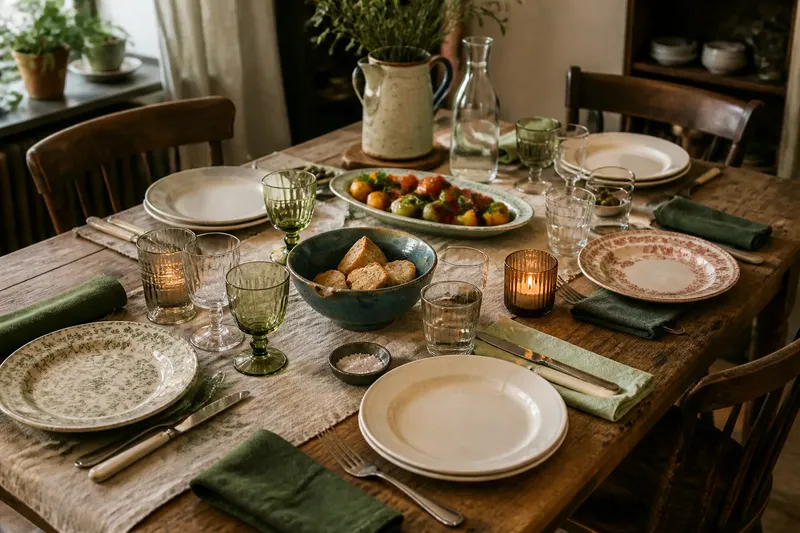
The blue bowl has a chipped rim, the charity-shop glasses do not match, and the green napkins come in two shades. Together, they make a table that feels lived in rather than unfinished. A mixed table setting works because coordination is not the same as sameness: a few visible connections can give different pieces a shared rhythm without hiding their differences.
Perfect coordination can even make a table feel less personal. When every object repeats the same colour, shape and finish, there is little to suggest who gathered the pieces or how the meal will unfold. A useful mismatch gives the eye a small surprise, while repeated details keep the arrangement from feeling accidental.
Why can a coordinated table feel less personal?
A matching set offers a ready-made order, but it also narrows the story the table can tell. The old bowl kept for bread, the glass picked up on a trip and the plates inherited from family carry different histories. Putting them together lets those histories sit side by side.
This is not an argument for scattering every spare object across the table. A useful contrast needs some breathing room. Think of the setting like a shelf of books: different covers can belong together without every spine being the same colour.
There is a practical difference, too. A table is handled, passed across and cleared. If a prized object is awkward to hold or blocks a shared dish, its appearance is not enough to make it a good choice for that meal. Personal character works best when the objects still support the people gathered around them.
What creates order without a matching set?
Look for one or two links rather than trying to make every piece agree. A repeated colour, a related outline or a contrast in texture can do the work. The other details can remain distinct.
- If a colour appears on several plates, echo it with a napkin or serving bowl; if the patterns already feel crowded, keep the cloth plain instead.
- If different dishes share a rounded outline, group them together; if the shapes are already similar, use one long platter to break the repetition.
- If the table has mostly smooth surfaces, add a woven runner or timber board; if the cloth is coarse, choose a few glossy dishes rather than adding more rough textures.
- If patterned plates dominate, use clear glasses and simple cutlery; if the plates are plain, let one patterned bowl or jug take the visual lead.
- If a serving piece is easy to pass and useful for the meal, keep it in reach; if it blocks hands or sightlines, move it to a sideboard or remove it.
- If a cherished item is comfortable and sturdy enough for its intended use, include it; if it is delicate or awkward, display it away from the busiest part of the table.
These choices make the claim more than a styling preference: a coordinated table is one possible arrangement, not a requirement for order. The point is not to replace one rigid rule with another, but to notice which links help your particular collection work.
How can colour, shape and texture work together?
Colour is an easy place to begin. A rust-coloured serving dish might pick up a thin line on a cream plate or the warm tone of a wooden board. The shades need not match exactly. A hint of repetition is enough to connect them.
Shape offers a quieter link. Low, rounded bowls beside round water glasses make a gentle rhythm, even if one is ceramic and the other is pressed glass. A long platter can interrupt that pattern and give the eye somewhere else to rest.
Texture adds another kind of contrast. Try smooth plates with a linen napkin, or clear glass beside a rough wooden board. If several surfaces already compete, leave part of the table plain. Empty space gives the objects and the food room to register.
How do I mix tableware without losing character?
Say you have four white dinner plates, two patterned side plates and a chipped blue bowl. Put the side plates at opposite ends rather than clustering them, set the blue bowl in the centre for bread, and use plain napkins that echo the white plates. The resulting arrangement has a repeated light colour and a focal point, while the different patterns and the bowl’s worn rim remain visible.
Now consider the meal itself. A tomato salad may stand out on a pale platter; dark berries can give a cream bowl a focal point. Let the food contribute colour, but choose serving pieces that are comfortable to pass and large enough for their job. A display that prevents someone reaching the shared bowl has lost its purpose.
For a casual lunch, a favourite mug might hold water and a small plate might serve bread. For a more formal meal, the pieces can still vary, but make sure guests can tell which glass or dish is intended for each use. In either case, keep the expressive objects where they will be enjoyed rather than knocked or repeatedly shifted.
What should I consider before setting the table?
Start with the way people will eat. A meal with shared dishes needs clear space for passing and somewhere to put serving spoons. A gathering with children may call for sturdy plates and an open area for elbows. For a slower meal, a small cluster of fruit, a jug and a low candle might be enough.
Check each piece in context. Can it be picked up easily? Does it hold the food or drink intended for it? Can people see and talk across the table? If not, move it, swap it or leave it out. For delicate heirlooms or unfamiliar materials, follow care guidance from the maker or owner.
What do people ask about mixed table settings?
Do all the plates need to match?
No. A repeated colour, shape or finish can connect different plates without making them identical. Keep at least one contrast visible so the arrangement still feels like your own collection.
How many colours should I use?
There is no fixed number. If the dishes and food are colourful, keep napkins and glassware quieter; if the table is mostly neutral, one vivid bowl or cloth can provide a clear accent.
Can mismatched glasses look deliberate?
Yes. Glasses with a related silhouette or tone can sit together even when their details differ. If each glass has a strong pattern or colour, simplify the rest of the setting so the meal remains the focus.
What should I remove if the table feels too busy?
Begin with decorative objects that obstruct serving or conversation, then remove one competing pattern or texture. Leave a plain patch visible so the pieces that remain have room to stand apart.
A mixed table setting can make coordination feel less like a test and more like a choice: connect a few pieces, let others differ, and keep the meal easy to share. The chipped bowl does not need to match the plates to belong; it needs a place where it can hold the bread and be passed around.