The Crunch You Hear: Why Sound Changes a Bite
Food sounds shape how a bite feels. Learn to notice the cracks, pops and softer crushes that distinguish textures without mistaking loudness for freshness.
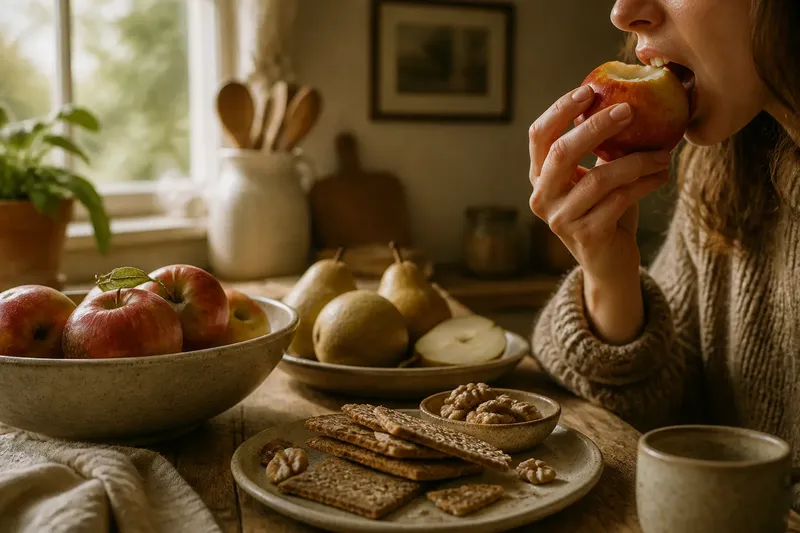
You bite into an apple in a quiet kitchen: a quick crack rings through your jaw, followed by smaller, softer sounds. Food sounds help shape how a bite feels, adding clues about texture while taste, smell and touch fill in the rest.
The sound comes from physical changes as food breaks, bends or compresses. Yet what you hear also depends on your mouth, the room and where your attention rests. Listening closely can reveal the character of a crunch, but not serve as a verdict on a food’s quality.
Why does a crunchy bite sound so vivid?
A crisp food can break abruptly. A brittle crust fractures; a firm vegetable splits; a crisp snack makes a scatter of tiny cracks. Those quick changes create vibrations that travel through the air and through the jaw and surrounding tissue.
The eater hears more than someone across the table. Vibrations conducted through the mouth and jaw make a bite feel close and immediate, while a nearby listener mainly hears sound travelling through the air. The crackle is tied to the act of biting, not simply a small noise from elsewhere in the room.
A single fracture may make a sharp snap. Several fractures make a run of clicks and crackles. That contrast helps distinguish breaking from bending or yielding, though the sound is only one part of the sensory information.
It is a little like the difference between snapping a dry twig and pressing a sponge: one gives way abruptly, the other changes shape quietly. Food can fall anywhere between those sensations, with wet, soft or airy sounds mixed into the bite.
How does sound change the texture we think we feel?
Pressure in the teeth and mouth provides information about a bite; its sound adds another cue. A sharp crack may draw attention to brittleness, while a subdued sound can make the same bite seem less crisp. The sound does not reveal one exact texture, but it can colour the impression.
Imagine someone biting a thin cracker while headphones play a low, muted chewing sound. The cracker still breaks, but the quieter cue may make its crispness less prominent to that listener. When the headphones come off, the crackle may stand out again. This is an invented illustration of perception, not a promise that everyone will respond in the same way.
Expectations matter, too. A crisp noise may lead you to anticipate a clean break; a soft, wet sound may suggest a yielding bite. The food can still surprise you, because expectation steers attention rather than dictating sensation.
What makes one crunch sharp and another soft?
No single feature decides how a food sounds. Its structure, moisture, air pockets, temperature, preparation and the way you bite can all contribute.
- If a bite makes one abrupt snap, notice whether it broke cleanly; if so, describe that fracture, but do not infer freshness from it.
- If you hear several small cracks, note their quick succession; if they follow a larger break, describe a layered crunch, but do not treat the sound as a quality score.
- If the bite bends or compresses before breaking, note the softer sound; if the texture matters to your choice, compare it with a familiar bite rather than relying on loudness.
- If a moist surface makes the bite quieter, check whether a crisp centre or crust still cracks; if it does, describe both textures, but avoid calling the whole food either crisp or soft on sound alone.
- If you hear little pops, consider whether air pockets may be collapsing; if you cannot tell, describe the pops without assigning them a cause.
- If temperature seems to change the bite, compare what you can feel and hear without assuming a simple rule; if the result is unclear, leave temperature out of your description.
These are ways to describe what you notice, not tests for freshness, safety or craftsmanship. A quiet bite may reflect a small piece, a different chewing position or a noisy room as readily as a change in texture.
Does a louder crunch mean food is fresher?
No. Loudness alone cannot tell you whether food is fresh, safe or well made. A crisp crack can describe how a particular bite breaks, but it cannot settle a broader judgement about condition. For food-safety concerns, rely on appropriate handling guidance and consult a qualified professional when needed.
Nor does louder mean better. One person may enjoy an emphatic crackle; another may prefer a restrained bite. Taste, smell, temperature and personal preference all contribute to the experience.
Keep texture words separate from quality claims. “Crisp” describes a perceived breaking quality. “Fresh” is a broader judgement about a food and its handling; a crunch cannot prove it.
Why does chewing sound different from one person to another?
The bite’s position and the teeth involved affect how vibrations travel. Jaw movement and the way someone chews can change what the eater hears and what reaches another person nearby.
The room changes the listening conditions, too. Conversation or music can mask small clicks, while a quiet kitchen leaves them easier to notice. The eater hears vibrations through the body as well as sound in the air; a listener across the table mostly hears the latter.
Attention makes a difference. Focus on a crisp bite and its separate snaps may stand out; get caught up in conversation and the same sounds may fade from notice. The food has not changed, but the listening experience has.
Why can the same food sound different on video?
A microphone records sound travelling through air. It cannot capture the eater’s full experience of vibrations through the mouth and jaw. Recording position, room acoustics and playback speakers all shape what reaches the viewer.
A close microphone may make small crackles prominent, while a phone speaker may blur their detail. Editing and sound design can shape a clip as well, so its vivid crunch does not tell you whether the audio is untouched.
You can still listen for useful descriptive details: does the bite break in one snap or several, does a softer crush follow, and how does the sound fade? Those observations describe the recording, not the full texture or quality of the food.
What do people ask about food sounds?
Why might an apple sound louder than a ripe pear?
An apple may break with a sharper crack, while a ripe pear may yield more softly. Variety, ripeness, bite size and chewing position can change what you hear, so the contrast is not a fixed rule.
Can you hear crispness without taking a bite?
Snapping or breaking a piece can reveal how it fractures. Chewing also creates vibrations inside the mouth, so an outside sound does not reproduce the eater’s whole sensory experience.
Does a quiet crunch mean the food has gone soft?
Not necessarily. The piece may be small, the room noisy or the bite taken with a different part of the mouth. Sound is one clue about texture, not a complete diagnosis.
Why can food seem different when I have a cold?
A cold can affect smell and alter how food seems overall, while congestion may change what you notice as you eat. If changes in taste, smell or other senses concern you, seek advice from a qualified health professional.
How can you describe a crunch more precisely?
Say you have a crisp vegetable, a brittle biscuit and soft bread on a plate. Take a small bite of each in a calm room. For the vegetable, you notice a first crack followed by little snaps; for the biscuit, one brief break; for the bread, a quiet compression. The resulting descriptions are “a crack followed by small fractures”, “a single brittle snap” and “a soft compress”, rather than a ranking by volume. This invented comparison gives you a way to connect sound with what your teeth and tongue feel.
Listen for the part sound cannot explain: does the food feel dry or moist, and does it break cleanly or tear? Does the noise match your expectation? These questions connect what you hear to what your mouth reports.
The next time a crisp bite catches your attention, notice whether it makes one clean snap, a string of tiny fractures or a crack followed by a soft collapse. Using “food sounds” as a cue for texture—not a measure of freshness—keeps the description useful and leaves room for taste, smell and preference to complete the bite.