Shared Plates, Plated Meals and Buffets: Choosing How to Serve
Compare shared plates, plated meals and buffets to choose a serving style that suits your dishes, table layout and guests’ comfort.

The roast potatoes arrive in a bowl, while the serving spoon sits just beyond a guest’s reach. A host could pass the bowl, plate each portion in the kitchen, or set the food on a sideboard for a buffet. Shared plates, plated meals and buffets each create a different rhythm at the table, and the best choice depends on the food as well as the room.
Think of serving style as the route food takes to reach a plate. A short, clear route makes the meal feel easy; a confusing one can interrupt conversation. Rather than treating the options as rival rules, choose the arrangement that suits the dish, the table and the people eating.
What changes between shared plates, plated meals and buffets?
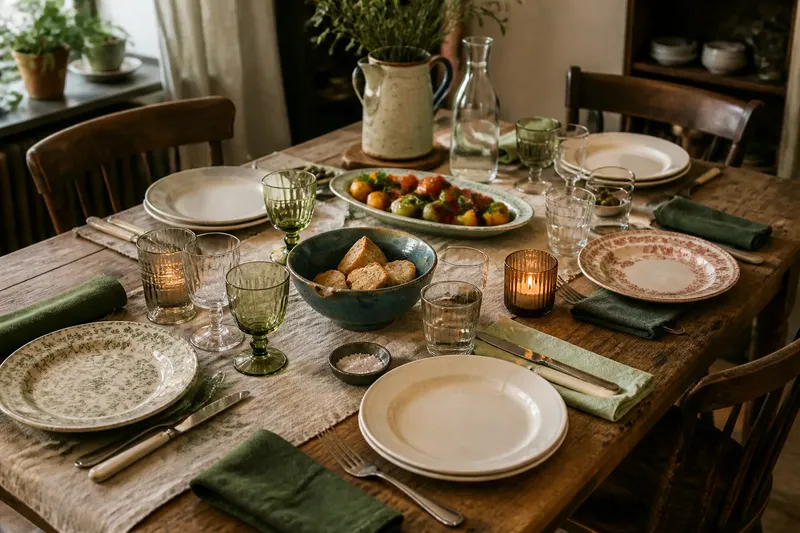
With shared plates, dishes sit on the dining table and guests pass them around. The arrangement makes serving part of the meal: someone offers the bread, another passes the greens, and the food moves alongside conversation.
With plated service, the host portions food before bringing it to the table. Guests have a clear place to begin, and delicate or awkward-to-pass dishes stay intact. The trade-off is that diners may need to ask for a smaller serving, an extra spoonful or a change to the plate.
A buffet places food on a separate surface, such as a sideboard or kitchen counter. Guests move along the spread and choose what they want, then return to their seats. It can free a crowded table, though the route should not cross a doorway or create a bottleneck.
A mixed arrangement uses more than one format. For instance, the host might plate soup, pass bread at the table and set dessert on a sideboard. That is not indecision; it is a way to give each dish a suitable route.
How does the food affect the serving choice?
Consider whether a dish travels neatly, stays appealing as people serve themselves and needs particular utensils. A bowl of roast vegetables is straightforward to pass. A fragile tart or hot soup is often easier to portion before it reaches the table.
Temperature and texture matter, too. If a dish needs to be served promptly, plating it in the kitchen can keep the first serving orderly. If diners may want to choose among separate components, keep those components in bowls rather than combining them in advance.
Imagine you are serving a grain meal with roasted vegetables, yoghurt sauce and toasted seeds. The starting arrangement is one large, fully mixed platter. Instead, put the grains and vegetables in separate bowls, with sauce and seeds alongside; provide a serving spoon for each. Guests can choose their own combination, and the bowls can travel around the table without requiring anyone to pick ingredients out of a mixed dish.
For a buffet, use dishes that are easy to serve with the tools available. A wide bowl and a large spoon suit a stew better than a narrow serving vessel. Keep labels close to dishes when ingredients may not be obvious, and use separate utensils for foods that need to remain apart.
What should you check before choosing a serving style?
Make the decision by looking at the actual table and meal, rather than relying on a rule about what counts as hospitable. Each check below pairs an observation with a choice and an alternative action.
- Reach: If guests can reach a shared dish without leaning across others, place it on the table; if not, divide it between smaller bowls or serve it from a sideboard.
- Table space: If plates, glasses and serving dishes fit comfortably, use shared plates; if the table feels crowded, plate the main course or move the food to a buffet surface.
- Dish shape: If the food holds together when moved, offer it for passing; if it is fragile or awkward to portion at the table, plate it in the kitchen.
- Choice: If guests may want different combinations, keep components separate in bowls; if the dish is best served as a composed portion, plate it and make any extra sides available separately.
- Movement: If guests can reach a buffet without blocking a doorway or each other, set it on a sideboard; if the route is narrow, serve at the table instead.
- Serving tools: If every shared dish has a suitable spoon, fork or tongs, invite guests to serve themselves; if a dish lacks a proper utensil, provide one or have the host portion it.
- Dietary needs: If a guest has told you an ingredient must be avoided, ask what arrangement would help and keep relevant foods and utensils separate; if the safe approach is unclear, check labels and seek qualified advice rather than guessing.
How can the arrangement feel clear without feeling formal?
Guests should not have to decode whether a dish is for passing, serving or decoration. A short invitation does the work: “Please pass the bowls along,” or “The main course is plated; help yourself to the sides.” Put a serving utensil in each communal dish and begin the passing in one direction if the table is unfamiliar.
Buffets benefit from a simple, visible sequence. Put plates at the beginning, followed by the dishes and their serving tools, with cutlery and napkins where guests can collect them without doubling back. If the room is tight, keep drinks somewhere else so people carrying plates do not meet a queue.
For plated food, leave room for adjustment. Set extra bread, vegetables or sauce within reach, or tell guests where they can ask for more. If you are serving a dish with optional toppings, offer them separately so a guest can choose quietly.
Check the arrangement from a seated position. If the water, bread and shared dishes are all beyond someone’s comfortable reach, move them or ask another guest to pass them along. A practical layout is more useful than a perfectly centred display.
Which questions help you choose a serving style?
Is family-style serving the same as a buffet?
Family-style food is placed on the dining table for guests to pass. Buffet food is set apart, so guests leave their seats to serve themselves; the two formats create different movement around the meal.
When is plated service a better choice?
Choose plated service when a dish is delicate, hot or awkward to pass, or when a crowded table has little room for serving bowls. Leave a way for guests to request more or adjust a side.
Can one meal combine all three serving styles?
Yes. You might plate a composed main dish, pass bread and greens, then set dessert on a sideboard. Tell guests which parts are ready on their plates and which are for sharing.
How can a host make a buffet easier to use?
Arrange plates, food and utensils in a clear sequence, and keep the route open. If guests would have to queue in a narrow doorway, bring the dishes to the table or divide the spread between two accessible surfaces.
What does a mixed arrangement look like in practice?
Say you are hosting neighbours who have not all met. Your starting meal is baked fish, potatoes, green beans and lemon wedges, with a small dining table that has room for plates but not several large platters. First, plate the fish and potatoes in the kitchen. Next, put the beans in two modest bowls with serving spoons, and place the lemon wedges in a small dish between the bowls. Finally, invite guests to pass the beans and lemon while the plated food stays put. The result is a clear first serving, an easy way to add a side or lemon, and less reaching across the table than one central spread would require.
For your next meal, use the same checks: look at the dish, the available surface and the route guests will take. Shared plates, plated meals and buffets are tools, not statements about the kind of host you are. The most useful serving choice is the one that lets guests see what is on offer and decide how to take part.